Showing posts with label R&R. Show all posts

Friday, March 23, 2018

13 Days until I fly to Kathmandu: Heroes, rest and sleep

I am putting my best foot forward to rest; it doesn't come easy for me.  My preference is to be on the go all the time.  Now, I need to fully recover and be as strong and healthy as I can be before taking off.  Thank you so much for following my preparation and eventual expedition.  Here are a few things that occupy my mind these days.

1.  A search for heroes.  The popular media wants to make everyone normal.  I'm normal - that much I know.  But even some of those that have superior skills and devote themselves to amazing feats of endurance get belittled to the level of mediocrity.  For some reason, we refuse to admit heroes into our lives.  I have a few who inspire me to keep going when the going gets really tough.  Hopefully you have a few too.  Here are mine:

Dag Aabye.  You probably never heard of him.  I'm sure he would find that fact quite comforting.  Dag is a young Canadian man (76 years old according to some) who lives in the Canadian wilderness and lives off the grid in the most marginal of ways.  To most, he would be seen as an eccentric old man.  I see him as a leader.  He lives how he wishes to live.  Not only that, he runs every day and is as fit as a person one third his age.  Do yourself a favor and watch this amazing short movie on Dag.  He doesn't know me and I don't know him - other than what I have read and watched about this man.  To me, a hero exists in our minds and not in the media.  Learn a little about Dag if you care to.  Heroes live their lives according to their own values.  Dag does precisely that and he obviously prospers.  Oh, if you want to know about his accomplishments in running, watch the movie.  As a teaser, he is the oldest person to ever finish the 80-mile ultramarathon often referred to as the "death race."

Sarah Thomas.  Heroes come in all forms and Sarah is one of my heroes.  She doesn't know it despite the fact that we are "friends" on Facebook.  I never met Sarah in person but read about her swimming feats for the past few years.  Sarah currently holds the longest known nonstop, solo swim (in a current-neutral body of water) - not that the last parenthetical bit makes one lick of difference.  She swam non-stop for 56and a half hours er...67 hours!  (Thanks Evan for the fact checking)  If that doesn't deserve some level of hero status, I have no idea what does.  I admired her tenacity for swimming for sure but my admiration grew steadily with her current missing.  Bad news befell her and her family; Sarah had a cancerous growth and is currently undergoing chemotherapy.  All the while, she remains optimistic about the outcome and longs to get back into the water.  Heroes come from not just sporting events but also emerge from life struggles.  A hero is someone who overcomes great odds and faces the dangers with a positive outlook.  Sarah matches all my criteria and I wish her well.  Hopefully one day our paths cross.

Aleksander Doba.  One of my students just emailed me a NY Times magazine article about a guy I never heard of before reading the piece.  He is one of my new-found heroes.  Why?  He - like Dag and Sarah - endures huge challenges with an openness to accept what comes.  I loved his self-deprecating statement "Nobody cares if you cross the Atlantic in a kayak."  He focuses on objectives that he desires - not just ones that others set.  I admire his focus and self-determination.  Moreover, he and I share the same attitude about aging where he said "I don't want to be a little gray man."  Heroism comes in many forms but Doba captures so much of what I admire in people that I could not resist putting him on my short list today. 

There are countless others who I omitted from this list.  Today, I am just full of appreciation for those who provided me some guidance and many of you know your influence in and on my life.  I can only thank you today but later I will provide greater detail about those of you who supported me through thick and thin.

2.  Rest.  I am in full recovery mode right now.  No training...just rest.  I found over the years that short bouts of rest restores my interest in hard slogs.  As March approached, I started feeling burned out from hours and hours of indoor training.  I knew I was fit but I kept pushing to squeeze out any last bit of endurance gains left in my body.  At some point, however, those pushes did not provide much and I keep pushing to realize anything.  That point is when I stop.  Well, the truth of the matter is that I don't always stop; I push for a little bit more until my sleeping, eating, and working patterns change for the worse.  I try to avoid that bad outcome now by resting more often and gaining as much as I can when I feel fresh.  Rest is the only way I know to solidify my gains so rest is what I do now.  I intend to rest for one or two more days and then resume my tapering down of workout intensity, load, and duration.   

3.  Circadian Rhythm Shift.  As I got older, I found it increasingly more difficult to overcome jet lag.  If you think a cross-country trip gives you jet lag, then try a 12 hour time shift - the same time shift that comes with a trip from the east coast of the US to Tibet.  The 12 hour time difference often leads me to getting sick and feeling really lethargic.  To prevent these untoward outcomes, I decided this year to slowly shift my time zones by 30 minutes each day.  My typical sleep-wake cycle during training puts me in bed by 9pm and up at 5am (and then out of my hypoxic tent at 6am after some breathing exercises).  Last night, I went to bed at 1:30am  and tonight I crash at 2am.  When I say crash, I mean crash.  My eyes barely stay open during the last 15 to 30 minutes of my day.  By the time I am ready to leave Virginia for Kathmandu, I will be going to bed at 8am and waking at 5pm.  The truth of the matter is that my day will be completely wonky when I travel but I have been known to sleep just about anywhere.  Once, while flying to Australia, I slept almost 12 hours without interruption in the center seat in the center aisle.  Yep, I can sleep standing up.  So this shift in my sleep-wake cycle will help me adjust to the time difference right away with the real aim to reduce the stress on my body.  Stay tuned to hear how it works out.

Thanks for following along.  I have two more posts about my gear and intend to submit them no later than by Sunday.  Time is growing dearer by the day.  Stay tuned for a few more insights as I pack my bags, eat my favorite foods, and prepare myself mentally for the challenges ahead.


Friday, March 16, 2018

23 Days Remain: Gear sort resumes with my legs

As promised, I am detailing my gear again - resuming with my legs.  I noticed as I gathered up all my gear that I really do not have much to cover my legs.  Actually, that point is not true.  What I do have in gear covers my legs just fine but I do not have many articles.  I guess that is a good situation.  More gear is not necessarily better.  Below, I sorted my leg gear by layer starting with the base and moving outward.
Trusted Ex-Officio Underwear

Base Layer

I have three pieces of clothing for my base layer.  First, I have underwear (an obvious and rarely overlooked item) and that underwear is made of synthetics so I can wash them out quickly when the begin to stink.  I tried Merino wool before but they tend to be too hot and, while the stink a lot less than the synthetics, they are difficult to wash/dry when needed.  Underwear is an essential item that takes up little space in my pack and is the one item that I wear continuously throughout the climb.  Mind you, I don't wear the same pair - that would not sit well with my climbing mates.  The second layer I have on for most of the climb is my long base layer pants.  Several years ago I stumbled across these base layers and I doubt I would ever return to the constantly sagging Merino wool or synthetic base layers.  Here is a good picture (on the right below) of my X-Bionic base layer pants.  They offer both compression and warmth and can be worn every day for a month and never stink - I promise.  Even after a hard day of climbing where I sweat many liters, these things just seem to take in all my wonderful smells and turn those smells into something much more pleasant.  You'll note that when I discuss base layers, I will constantly harp on smell.  Expeditions produce rather ripe individuals and I am no exception.  Best to have many redundant base layers and be prepared to clean them when your climbing mates start looking at you with the evil eye.
Compression pants (R) & base layer (L)
Another important layer is my compression pants.  These pants help my legs recover after a long day of climbing; they really work - at least for me they do.  I put these on in place of my X-Bionic pants.  Compression pants do not offer much insulation but boy do they help my legs feel like new the next day.  I love wearing these compression pants in my sleeping bag at night after a long, hard day.  Talk about creature comforts!  

Speaking of creature comforts, I often wear my puff pants around camp when it is cold and windy.  These pants are like walking around with a sleeping bag on my legs.  I wear my compression pants under them and these on top as I stroll around trying to recover.  Nothing beats a good pair of puff pants for creature comforts.  You can just feel the warmth coming from these pants, right?  
Puff pants (MH)

Finally, I have my every day hard shell pants that just work.   There are many different styles to choose from but these pants work and they put up with a ton of abuse.  Hard shell pants are a climbers best friend.  Don't worry about spending money on the "top" pants.  Try them on and look for some critical features such as 1) full-length zips on each leg so you can take them off without taking off all your footwear, 2) water proof enough to keep you dry from the outside and not soaking wet from your own sweat, 3) rugged material that withstands a beating on snow, ice, and rock, and finally 4) low profile suspenders that do not cause you to have chafing marks while climbing with a pack.  I purchased these GoLite pants about 6 years ago and have patched them about 20 times.  They are tough and still hold out most of the water.  I ski, climb, and sail in these pants - they are that versatile.  Once you figure out how often you use a piece of gear, I strongly recommend you consider the cost per use.  A good pair of hard shell pants may run you about US$250 but over their lifetime, you may spend US$1 per use - at least that is what I figured I would spend.  These hard shell pants come in handy on most climbs and will be on my legs until I put on my summit suit.  
GoLite Hard Shell pants - a necessity for all climbs
Well, that is about it!  I have a few things that I rely upon almost daily and they keep my legs warm and ready for another day.  

Given the short time before I depart, I intend to catch up a bit and post every two or three days.  Sometime this weekend, I plan to cover my upper body and then full body gear.  There might be a few omissions simply because I am starting to feel rushed.  Soon, I must pack all my gear - well, at least pack it after I check it, check it again, check it a 3rd time, and then figure out where it might be best packed.  In the meantime, I thank you for following along with my adventure.  

If you are wondering what I am doing these days with respect to training, I am tapering off my training schedule and focusing more on recovery and healthy living.  With a little over three weeks before I depart, I have a ton of things still left to do.  Wish me well and see you shortly....

Monday, March 12, 2018

Under a month to go (27 days)! A few minor hiccups during the final stretch but ready

I left off promising more climbing gear descriptions but I got bogged down in work, preparation, and recovery.  Here is what is happening....

1.  Getting sick again.  Over the past few days, I came down with another ear/sinus infection so that I have that wonderful experience - sleeping in a hypoxic tent with a clogged head and a blasting headache.  Oh the fun!  

2.  Climbing plans remain unsettled.  We are still working on getting Brendan's Tibet visa; mine apparently has not run into any problems (I hope).  Brendan works in China and apparently he must give up his Chinese work visa if he obtains his Tibet climbing visa in Kathmandu.  Yeah, I know, it sounds very odd but nothing is surprising when it comes to Everest.  Every little problem just costs a little extra - often US$1000 here and there to make things right.  Brendan and I still have no firm plans on how to meet in Tibet before we climb.  We might just end up meeting at Advanced Base Camp after about 2 weeks of climbing.  I sure hope not.  My preference would be to meet way earlier - perhaps in Kathmandu - and enjoy the entire experience together.  Regardless, these hiccups are hardly a major concern.  We just need to sort them out.

3.  Recovering means NOT training.  I reached a point where my body and brain said ENOUGH!  My body and mind are ready to climb and more training will only serve to make me sick or lead me to lose more weight (more on that point later).  I am at a perfect climbing weight (176 lbs or 80 kg) and I do not want to lose any more weight.  Recovery entails weight training, running, and some additional weight training using a weight vest on the elliptical.  I don't plan to workout any longer than 2 hours each day and most days will be easy - around 90 minutes.  That workout time includes stretching, breathing, and warming up so don't think I am going crazy here.  

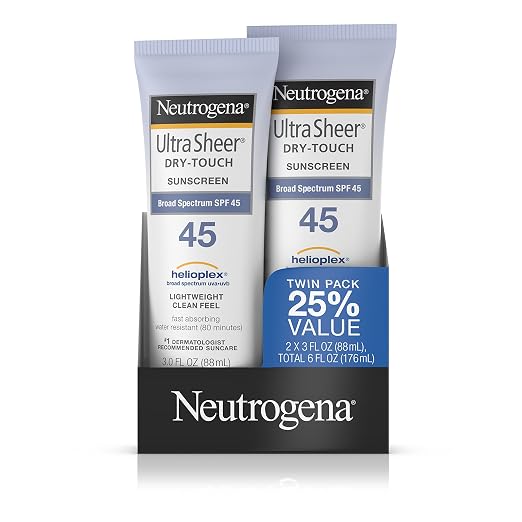
Neutrogena Ultra Sheer Dry-Touch Sunscreen, Broad Spectrum Spf 45, 3 Fl. Oz., Pack Of 2
4.  Last second purchases are done!  There are always little things that I need to purchase at the last second.  The timing often is important because what I purchase expires (e.g., sunscreen) or I don't know I need it until I finalize my packing.  Based upon a rather thorough gear sort, I purchased the final pieces to my entire climbing kit.  I checked and re-checked all my gear to ensure it is in fully functional order.  I'm ready to pack...but not so fast.

Garmin inReach Explorer+ Satellite Communicator Orange5.  Communications still need to be sorted out.  I plan to use a Garmin InReach for communications while we are climbing.  The InReach is quite a nifty device.  I can send texts and updates along with links to a map where you can locate us.  The only problem with technology is that you need to set it all up at home before you depart or else it simply will not work.  I think there must be some rendition of Murphy's Law that governs the operation of technology but the only way to prevent mishaps is to get things sorted out.  Over the next few weeks, I plan to post several "tests" that you can either ignore or become familiar with the system while I familiarize myself with it.  Every day (weather and time permitting), I plan to send a message indicating where we are and how we are doing.  Usually, these will be in the form of a map link and a simple "Doing fine, will send a more elaborate update when possible" message.  Expect these tests to start in the next few days.  

I finally have pictures of all my gear so once I get the time I intend to piece together my gear sort - resuming with my legs and working up my body.  

Thanks for following.  Hope you are enjoying the beginning of a fine week.  Expect another update in a few days.  


Tuesday, February 20, 2018

47 Days Remain: Hypoxic sleeping....in a tent...indoors.

As promised, I am going to take you on a tour of my hypoxic sleeping setup and routine.  Here is my tent:


Inside the tent, I have all the luxuries including a fingertip pulse oximeter (for measuring my spO2 in the morning), an oxygen meter (for measuring the ambient oxygen level), toilet paper (for blowing my constantly running nose throughout the night), heart rate chest strap (for measuring my morning heart rate variability or HRV), Nalgene bottle (to quench my thirst through the night), comfortable pillow, and snacks (for obvious reasons).  All of these items fit snugly along with my upper body in the tent.  

Every night, I go to sleep between 8 and 9pm and plan for at least 8 contiguous hours of sleep.  Well, I say plan because I rarely sleep soundly for 8 hours.  Often, I wake up every other hour to drink some water or pee.  A side note for the latter activity might be necessary to explain how I stay in the tent for at least 8 hours.  Peeing requires a bottle.  I'll leave the gory details to your imagination.

My Hypoxico units sit along the wall in my exercise room (adjacent to my bedroom).  I ran the hoses through the wall so that I could keep the units away from the bedroom and in a cooler location.  Also, these units generate a ton of heat when they run overnight.  Locating them one room away allows me to have a sound night sleep without the additional heat and noise.  Here are the units:


See the hose that runs from the right-most unit?  That hose runs through the wall and into my bedroom.  These units strip the oxygen from the room air and pump that oxygen-depleted air into my tent.  The units have setting numbers that do not correspond exactly to the oxygen percent or any other value that makes sense.  I found that the units could loosely be calibrated by simply tracking the settings and plotting those settings to the observed oxygen percentage inside the tent.  Below is a snapshot of that calibration:


You'll note that the variability of the oxygen percentage varies quite a bit for each setting value.  I noticed this variability the more I observed the correspondence between these two variables.  Perhaps a more interpretable figure is the one that shows the relationship between the unit settings and the simulated oxygen levels (in Feet):


I have a few more setting units left on the scale to go but you can see clearly that my sleeping altitude is now about as high as these Hypoxico machines go.  What do these values mean in terms of my adaptation?  Well....they make it tough on my body for sure.  For those of you with extensive medical training, avert thy eyes.  You might get a shock from some of the numbers.  Fear not!  I am alive and doing quite well.  Here are spO2 values for each of the unit settings:

Yeah, some days are harder than others.  You can see that my spO2 drops with each successive value on the Hypoxico unit.  Over time, however, I tend to acclimatize to the oxygen levels and my spO2 improves.  How much does it improve?  Not enough to keep me out of the emergency room for those who know what these numbers mean.  A healthy person has an spO2 in the upper 90 percent range (I measure about 99% at sea level).  On setting 5 (as indicated in the figure above) using the high altitude adapter on full, I have a median spO2 of about 84%.  Contrast that number with my median spO2 of 71 on setting 6.5 with the adapter on full.   You can see that the response to the oxygen depletion is quite dramatic.  On about the 4th or 5th day of sleeping at each setting, I typically wake up with higher spO2 values and feel great; the first days on each setting can be quite rough.  So I feel an improvement even though I cannot observe that improvement by my spO2 values.  

All of these figures fail to tell the real story.  I need to explain what I am doing.  Here is a snapshot of my hypoxic acclimatization process.  I began my hypoxic sleep training in earnest on January 8th, 2018 by setting my Hypoxico unit to "9" (without the high altitude adapter) and sleeping blissfully for 9 hours.  NOTE:  I actually began sleeping in the tent on July 23rd, 2017 when I returned from a wonderful trip to Ireland.  OK, back to my "earnest" training. Setting 9 resulted in a oxygen concentration in the tent air of 13.6% or an equivalent altitude of 11,100 feet (3383m).  My spO2 in the morning was 88% or good enough to land me into the emergency room for most normal people.  Most of you realize I am not normal so that hospital trip would be a waste.  After about 5 days, I changed the unit setting by 0.5 to simulate a slightly higher altitude.  Each increase leads to a slight decrease in my spO2 (see figure above for some idea about how much change I observe).  

By sleeping every night at a simulated altitude, I increase my red blood cell count and potentially increase the oxygen carrying capacity of those red blood cells (by increasing the hemoglobin).  There are some conflicting views on the effectiveness of this process but I assure the most ardent skeptic that there is no way I could trek to Everest Basecamp in 2 days had it not been for the hypoxic sleep training I did in 2015.

Hopefully these tidbits provided you with some glimpse into one aspect of my training routine - my hypoxic sleep training.  During my next "rest day," I intend to describe some of my gear - starting with my feet.  With 47 days left, I have approximately 11 more full rest days to report on my preparation.  My sinus infection is now gone and I feel great.  With 43 days remaining, you will learn what I plan to wear on my feet.  Each successive post focuses on another part of my body's gear until I end with my head.  So, stay tuned for a foot to head detail of my gear.  

Thanks for following my adventure.

Monday, November 28, 2016

Taking some time off

Greetings,

I know I have been silent for about 6 weeks now - nothing much to write about other than a few small sailing adventures and an ongoing battle with some nasty infection.  I sailed to the Bahamas with some friends.  

Life on a boat...in the Bahamas...in November.  Ain't life great?

We called ourselves the "four guys whose wives hate sailing" crew.  It was a fun time in some wild conditions.  

Overall, I would call that a fantastic getaway.  What made it slightly more interesting is that I am battling some mutant infection that manifested itself as skin lesions that just won't go away - at least not without large quantities of antibiotics.  
Just a few of these beauties I may start to name
So the past few weeks I have been taking daily doses of things like Ciprofloxacin and Doxycycline along with as much probiotic I can tolerate to prevent my gut from losing this battle.  Yeah, it has been fun.  I hope to be able to resume normal activities sometime in December but I suspect I won't be able to train much until January.  For now, I enjoy the time off and my refocus on work.  Yes, I do work.  

Thanks for all your support.  I hope to start posting more soon about my next few adventures.  Stay tuned for when those details come available.  In the meantime, have a great time on your own adventures - big, small, foreign, domestic, new, or routine.  We all have adventures in us; take as many as you can while you still can muster the energy.  Thanks again and see you soon.